
How Much Do Gutter Guards Cost?
August 4, 2026 5:36 pmIf you are considering ways to reduce gutter maintenance and protect your home from water damage, you may be wondering how much gutter guards cost. The answer depends on several factors, including the type of gutter guard, the size and design of your home, the condition of your existing gutters, and whether you choose professional installation. Most homeowners can expect gutter guard pricing to vary considerably because every property has different needs. Understanding what affects the total investment can help you compare options, plan your budget, and choose a system that provides dependable long-term protection.
What Are Gutter Guards?
Gutter guards are protective systems installed over or inside rain gutters. Their primary purpose is to keep leaves, twigs, pine needles, pests, and other debris from collecting in the gutter channels. At the same time, the guards allow rainwater to enter the gutters and move safely through the downspouts.
Without protection, clogged gutters can overflow during storms. Water may spill over the sides of the gutters, pool near the foundation, damage landscaping, stain siding, or contribute to roof and fascia deterioration. Gutter guards can reduce the frequency of cleaning and make it easier for your gutter system to function as intended.
It is important to understand that gutter guards do not make gutters completely maintenance-free. Small debris, roof granules, dirt, and seeds may still collect over time. However, a properly selected and professionally installed gutter guard system can significantly reduce buildup and simplify routine maintenance.
What Is the Average Cost of Gutter Guards?
Gutter guard pricing is commonly calculated by the linear foot. The total cost may range from a relatively affordable amount for basic do-it-yourself products to a much larger investment for premium systems with professional installation.
A typical home may have approximately 150 to 250 linear feet of guttering, although the exact measurement depends on the home’s size, roofline, number of stories, attached garages, porches, and architectural features. Homes with multiple roof sections or complex layouts generally require more materials and labor.
The final cost usually includes some combination of the following:
- Gutter guard materials
- Professional installation labor
- Cleaning and preparing the existing gutters
- Minor gutter or downspout repairs
- Removal of old gutter protection
- Specialized equipment for tall or difficult-to-access areas
- Additional components for corners, valleys, and unusual rooflines
Because online averages cannot account for the specific condition or design of your home, an on-site consultation is one of the most reliable ways to receive an accurate estimate.
Gutter Guard Costs by Type
The type of gutter guard you select is one of the biggest factors affecting the total price. Each design has its own advantages, limitations, maintenance needs, and expected lifespan.
Screen Gutter Guards
Screen guards are placed over the top of the gutter and contain openings that allow water to pass through. They are generally designed to block larger debris, such as leaves and sticks.
Screen guards are often among the more affordable options. However, smaller materials such as pine needles, seeds, and roof granules may still pass through or become trapped in the openings. Screens may also need occasional brushing or rinsing to prevent buildup.
Mesh and Micro-Mesh Gutter Guards
Mesh gutter guards use smaller openings than standard screens. Micro-mesh products have especially fine openings designed to block very small debris while allowing rainwater to enter the gutter.
These systems often cost more than basic screens because they use more refined materials and may require more precise installation. High-quality micro-mesh guards can be a strong choice for homes surrounded by trees or exposed to pine needles and seed pods. Professional installation helps ensure that the guard is positioned correctly and that water does not overshoot the gutter during heavy rainfall.
Foam Gutter Inserts
Foam guards are inserted directly into the gutter channel. Their porous structure allows water to pass through while keeping larger debris near the surface.
Foam inserts are typically inexpensive and easy to install. However, they may hold moisture, collect small particles, or deteriorate over time. In some conditions, organic material can settle into the foam and encourage plant growth. These systems may be appropriate as a temporary or budget-friendly option, but homeowners should consider their maintenance requirements and expected lifespan.
Brush Gutter Guards
Brush-style guards consist of bristles installed inside the gutter. Leaves and larger debris remain on top while water flows between the bristles.
Brush guards are usually easy to place and remove. They can reduce large clogs, but small debris may become trapped within the bristles. As a result, the brushes may need to be removed and cleaned periodically.
Reverse-Curve or Surface-Tension Guards
Reverse-curve systems direct rainwater around a curved edge and into the gutter while allowing leaves and other debris to fall to the ground. These products often require professional installation and must be carefully aligned with the roof and gutter system.
Surface-tension guards may be more expensive than basic screens or inserts, but they can offer durable performance when installed correctly. Their effectiveness can vary depending on roof pitch, rainfall intensity, and the type of debris surrounding the property.
Perforated Metal Gutter Guards
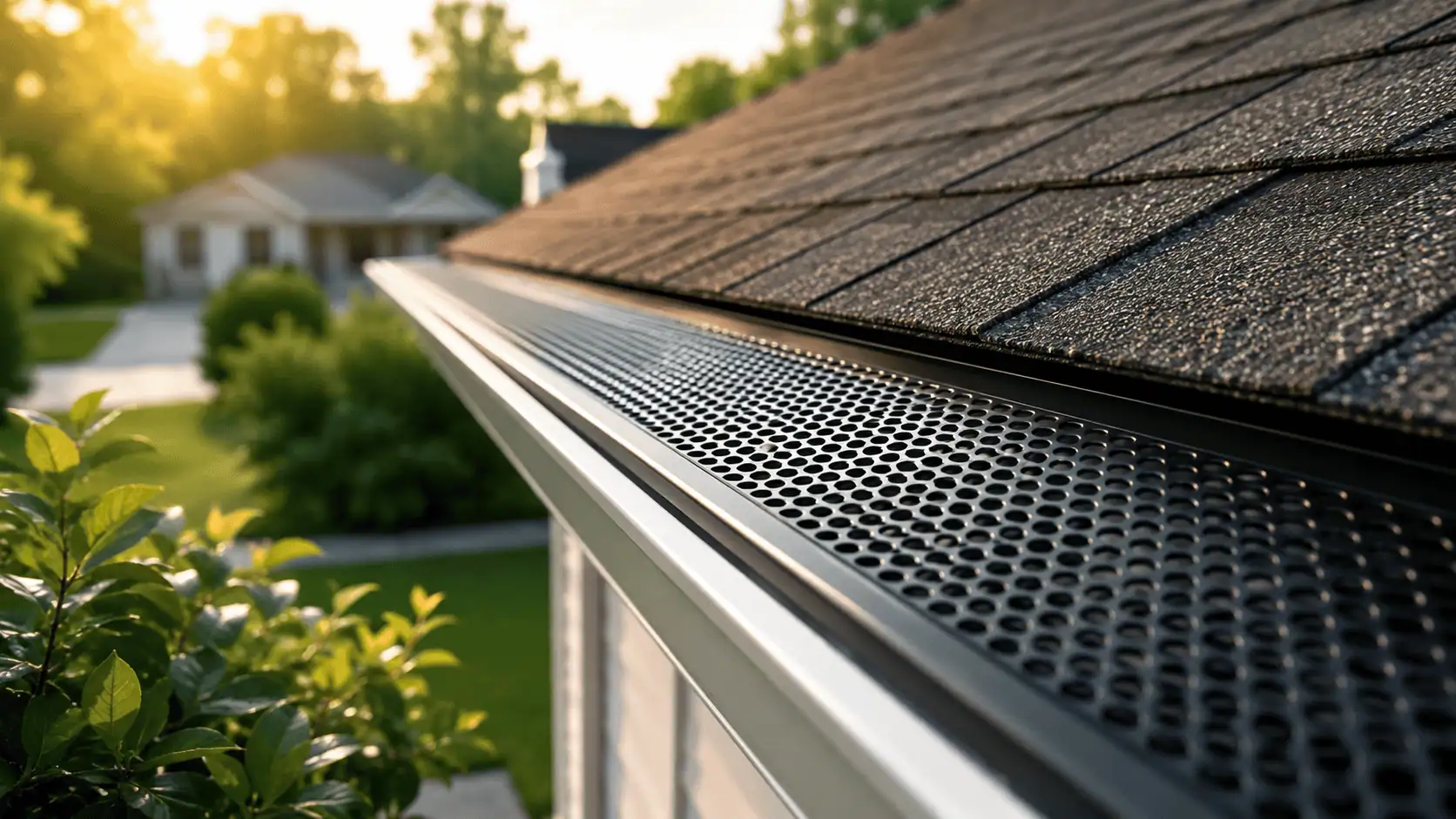
Perforated guards are commonly made from aluminum or steel and contain small holes that allow water to enter. Metal construction can provide greater durability than plastic or foam products.
Pricing depends on the metal type, thickness, finish, and installation method. Aluminum is lightweight and resistant to rust, while steel may offer additional strength. Proper installation is important to prevent sections from shifting or lifting during severe weather.
Factors That Affect Gutter Guard Installation Costs
Two homes with similar square footage may receive very different gutter guard estimates. The price is influenced by much more than the length of the gutters.
Total Linear Footage
A larger home or more complicated roofline requires more gutter guard material. Since pricing is often based on linear footage, homes with longer gutter systems generally cost more to protect.
Number of Stories
Installing gutter guards on a two-story or three-story property usually requires more time, safety equipment, and labor than working on a single-story home. Steep slopes, limited access, and uneven ground can also affect installation complexity.
Existing Gutter Condition
Gutter guards should not be installed over gutters that are damaged, sagging, leaking, or improperly pitched. If repairs are needed, they may increase the total project cost.
Common issues that may need attention include:
- Loose or missing fasteners
- Leaking seams or corners
- Rust, cracks, or holes
- Detached downspouts
- Improper gutter slope
- Rotten fascia boards
- Gutters pulling away from the roofline
Addressing these problems before installing guards can improve system performance and prevent the new protection from covering up an existing issue.
Gutter Cleaning
Existing gutters generally need to be cleaned before guards are installed. Leaves, mud, roof granules, and standing water should be removed so the system starts with a clear channel.
Some installers include cleaning in the estimate, while others charge separately. A heavily clogged system may require more labor than gutters that have been maintained regularly.
Roof Design
Roof valleys can direct large amounts of water into a concentrated section of the gutter. Dormers, multiple roof levels, steep pitches, and unusual angles may require customized guard sections or additional water-control components.
A professional contractor can evaluate these areas and recommend a solution that handles runoff without allowing water to spill over the edge.
Material Quality
Entry-level plastic guards generally cost less than premium aluminum, stainless steel, or micro-mesh systems. However, the least expensive product may not provide the best long-term value.
Higher-quality materials may offer:
- Better resistance to rust and corrosion
- Greater durability in snow, wind, and ice
- Improved performance against small debris
- Stronger attachment to the gutter
- A longer expected service life
When comparing estimates, homeowners should consider both the initial price and the expected replacement or maintenance costs.
Professional Installation Versus DIY Gutter Guards
Installing gutter guards yourself may lower the upfront cost, especially for a single-story home with a simple roofline. Many home improvement stores sell screen, foam, brush, and snap-in products designed for do-it-yourself installation.
However, working from a ladder carries significant safety risks. Installation may also be more complicated than it appears. Guards that are cut incorrectly, poorly secured, or installed at the wrong angle may cause water to overflow or allow debris to enter.
Professional installation offers several advantages:
- Proper measurement of the entire gutter system
- Product recommendations based on the roof and surrounding trees
- Safe access to high or difficult areas
- Cleaning and inspection before installation
- Secure attachment of the gutter guards
- Identification of leaks, sagging, or drainage problems
- More consistent performance across corners and roof valleys
Professional service may cost more initially, but it can reduce the risk of installation errors and help protect the gutter guard investment.
Are Gutter Guards Worth the Cost?
Gutter guards can be worthwhile for many homeowners, particularly those with mature trees near the roof. The value depends on the amount of debris the property receives, how often the gutters currently need cleaning, and whether the homeowner is comfortable working on a ladder.
Potential benefits include:
- Less frequent gutter cleaning
- Fewer large clogs
- Improved rainwater flow
- Reduced risk of gutter overflow
- Less time spent on ladder-based maintenance
- Additional protection from nesting pests
- A lower chance of heavy wet debris causing gutters to sag
Gutter guards may be especially valuable for homeowners who have mobility limitations, own multi-story properties, or want to reduce recurring maintenance demands.
The system still needs occasional inspection. Storm debris may collect on top of the guards, and small particles can accumulate inside the gutters. Regular professional maintenance can help preserve performance and identify developing problems.
How to Choose the Right Gutter Guards
The best gutter guard is not necessarily the most expensive product. It is the system that fits your home’s roof design, gutter size, local weather, and surrounding environment.
Before choosing a product, consider the following questions:
- Are your gutters exposed primarily to broad leaves, pine needles, seeds, or roof granules?
- Does your roof have steep slopes or valleys that create concentrated runoff?
- Are your existing gutters securely attached and properly pitched?
- How much snow, ice, wind, and heavy rainfall does the property receive?
- How often are you willing to inspect or maintain the guards?
- Is the product compatible with your existing gutter system?
- Does the installation method affect your roof materials?
A qualified gutter contractor can assess these conditions and explain which options are likely to perform well for your property.
Ways to Manage the Cost of Gutter Guards
Homeowners can take several steps to make the project more cost-effective without sacrificing quality.
First, request a detailed estimate that separates materials, installation, cleaning, and repairs. This makes it easier to understand what is included and compare proposals fairly.
Second, ask whether the existing gutters can support a guard system. Replacing severely damaged gutters before installing protection may be more economical than repeatedly repairing an aging system.
Third, prioritize long-term value. A durable product with professional installation may cost more initially but require fewer repairs or replacements.
Finally, schedule a consultation before making a decision. A contractor can measure the gutter system, identify drainage concerns, and provide recommendations based on the home’s actual conditions rather than a general online price range.
Frequently Asked Questions
How much do gutter guards cost per linear foot?
The price per linear foot varies based on the product, material quality, roof design, and installation requirements. Basic do-it-yourself guards generally cost less, while premium micro-mesh or professionally installed systems usually cost more.
Do gutter guards eliminate the need for cleaning?
No. Gutter guards reduce the amount of debris entering the gutters, but periodic inspection and cleaning may still be necessary.
Can gutter guards be installed on existing gutters?
Yes, provided the existing gutters are secure, properly pitched, and in good condition. Damaged or leaking sections should be repaired before installation.
Are gutter guards effective during heavy rain?
A properly selected and installed system can handle heavy rainfall. Performance depends on the guard design, roof pitch, gutter capacity, and the amount of water flowing from roof valleys.
Which gutter guard type is best?
The best type depends on the debris around your home, your roof design, local weather, and maintenance preferences. Micro-mesh and durable metal systems are popular, but a professional assessment can help identify the most suitable option.
How long do gutter guards last?
The lifespan varies by material and installation quality. Plastic, foam, and brush products may need replacement sooner than well-made aluminum or stainless steel systems.
Can gutter guards prevent ice dams?
Gutter guards are not a complete solution for ice dams. Ice dams are often related to attic insulation, ventilation, heat loss, and roof temperatures. Guards may help keep gutters clearer, but they cannot correct the underlying causes.
Should gutters be repaired before installing guards?
Yes. Leaks, sagging, improper slope, loose fasteners, and damaged fascia should be addressed first. Installing guards over a failing gutter system may lead to poor drainage and additional damage.
Are professional gutter guards worth the higher price?
Professional installation can provide a better fit, safer installation, secure attachment, and recommendations tailored to the home. These benefits may justify the additional cost for many homeowners.
How can I get an accurate gutter guard estimate?
Schedule an on-site consultation with an experienced gutter contractor. The contractor can measure the system, inspect its condition, evaluate the roofline, and recommend appropriate options.
Request a Gutter Consultation From Seamless Gutterworks Co.
Finding reliable gutter contractors in Des Moines, IA, can be challenging, but experienced local help is available. We have served communities in and around Iowa Falls, Hardin County, Ackley, Ames, Des Moines, and Alden, Iowa, for more than two decades.
Our team is proud to offer some of the most comprehensive gutter services in the region, including gutter installation, cleaning, and repairs. We can evaluate your home’s drainage needs, inspect your existing system, and help you understand the options available for protecting your property.
Contact us today to schedule your free consultation on seamless gutters. Let our experienced gutter contractors help you create a dependable system that directs water away from your home and supports lasting protection through Iowa’s changing seasons.
Categorised in: Gutter Guards
This post was written by admin
Comments are closed here.